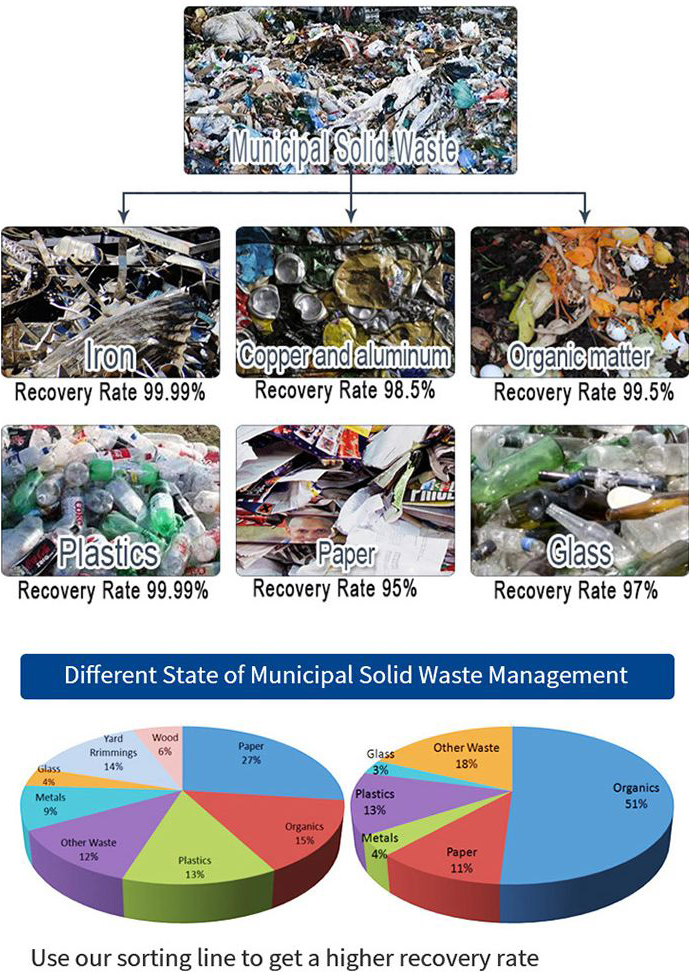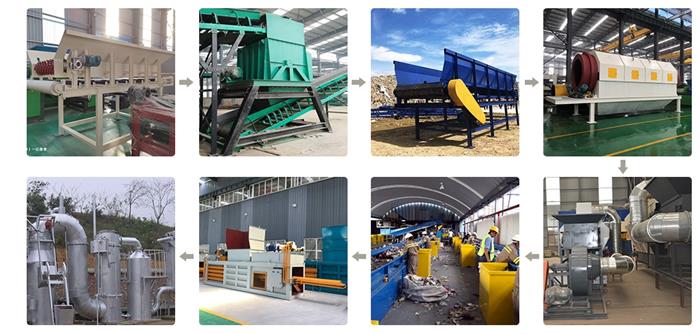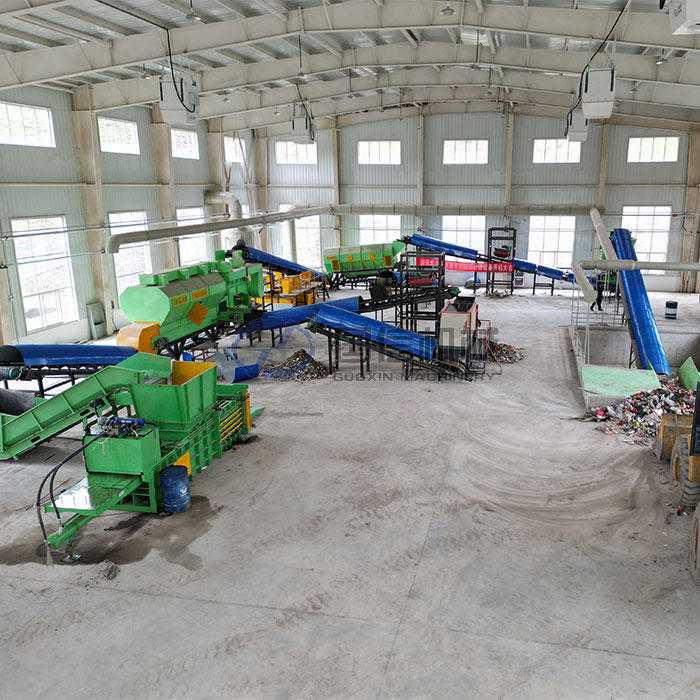
Municipal Solid Waste Sorting machine is a waste management system designed to efficiently process and sort mixed municipal solid waste (MSW) into recyclable materials and non-recyclables. The goal of such a system is to reduce the volume of waste sent to landfills, promote recycling, and minimize environmental impact. Here’s a general overview of how this type of production line works:
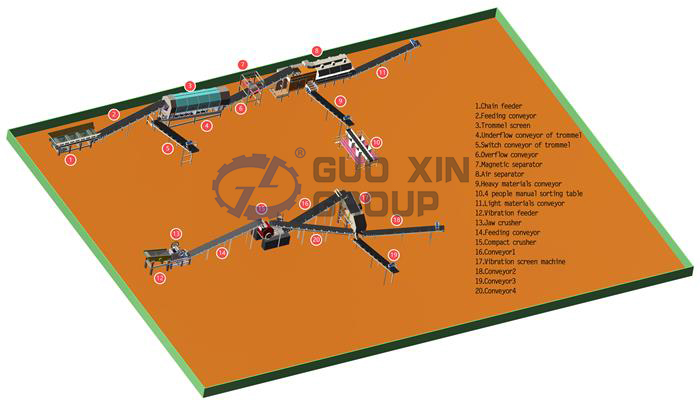
1. Waste Collection and Delivery
Collection: Municipal waste is collected from homes, businesses, and public areas.
Delivery: The waste is transported to a sorting facility, typically via waste trucks.
2. Pre-Sorting and Size Reduction
Pre-Sorting: Upon arrival, large items (such as furniture, electronics, and bulky plastic) are removed manually or with automated equipment.
Size Reduction: Waste is sometimes shredded or crushed using shredders to reduce the size of larger materials, making it easier to handle and sort.
3. Automated Sorting Systems
Conveyor Belts: Waste is fed onto conveyor belts, where it moves through various automated sorting stages.
Trommel Screens: A rotating drum screen separates materials based on size, with finer materials passing through the smaller openings and larger items being filtered out.
Air Classification: Air blowers can be used to separate lightweight materials like paper, plastic, and cardboard from heavier materials like metals and glass.
Magnetic Separators: Magnets are used to remove ferrous metals (e.g., steel and iron) from the waste stream.
Eddy Current Separators: These devices help separate non-ferrous metals like aluminum from the waste.
4. Manual Sorting Stations
Manual Inspection: Workers may manually inspect and sort materials that require more detailed attention or can’t be easily separated by machines, such as certain plastics or hazardous materials.
5. Separation of Organic Waste
Organic Waste: After the non-recyclable materials have been sorted out, organic waste such as food scraps and yard waste can be sent for composting or anaerobic digestion to produce biogas.
6. Recycling and Disposal
Recycling: Recyclable materials such as plastics, paper, glass, and metals are further processed and sent to recycling facilities to be transformed into new products.
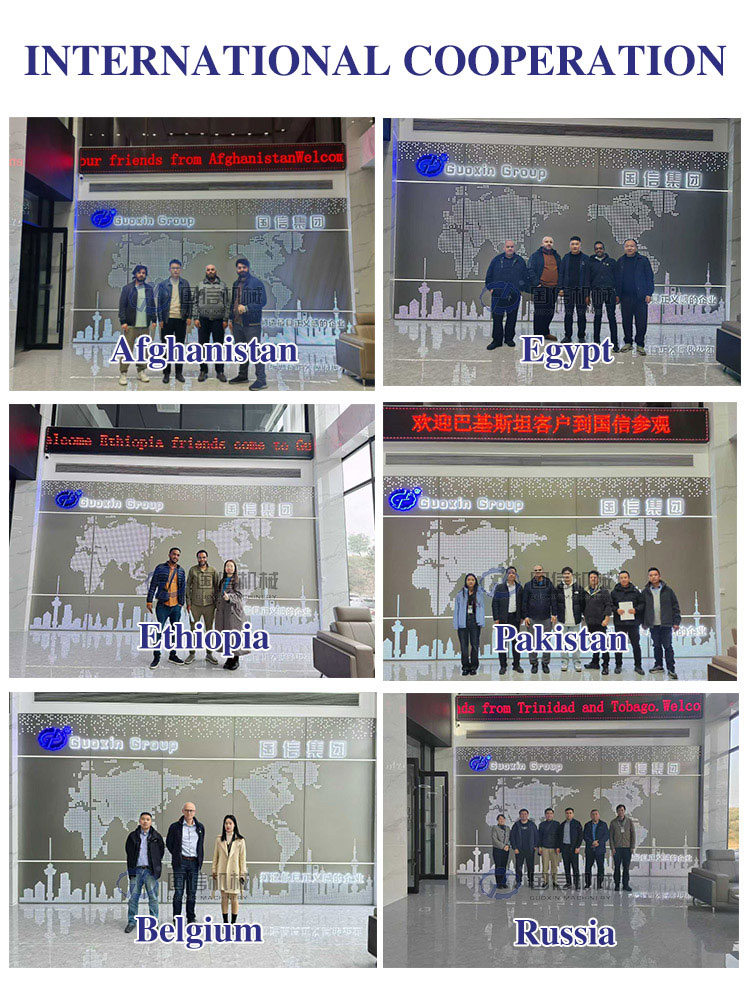
We have established business factories in more than 10 countries and regions around the world, and our Municipal Solid Waste Sorting machine has been widely praised by customers for its high performance. Guoxin has been involved in the waste sorting and processing industry for more than 20 years, and has established a well-trained, skilled, and dedicated R&D team to provide customers with stable and energy-saving Municipal Solid Waste Sorting machineProduction Line. No matter your application is industrial waste, solid waste, Landfill waste, etc., we can provide you with the most suitable solution for Municipal household Waste Sorting Production Line, including installation, adjustment and maintenance, making us the perfect partner